Getting your roof ready for hurricane season in Mobile
Hurricane season runs June 1 to November 30, and Mobile's worst storms have come in September and October. The roof work that matters happens in April and May, when a roofer can still get to you in a week instead of a month. Here's the list.
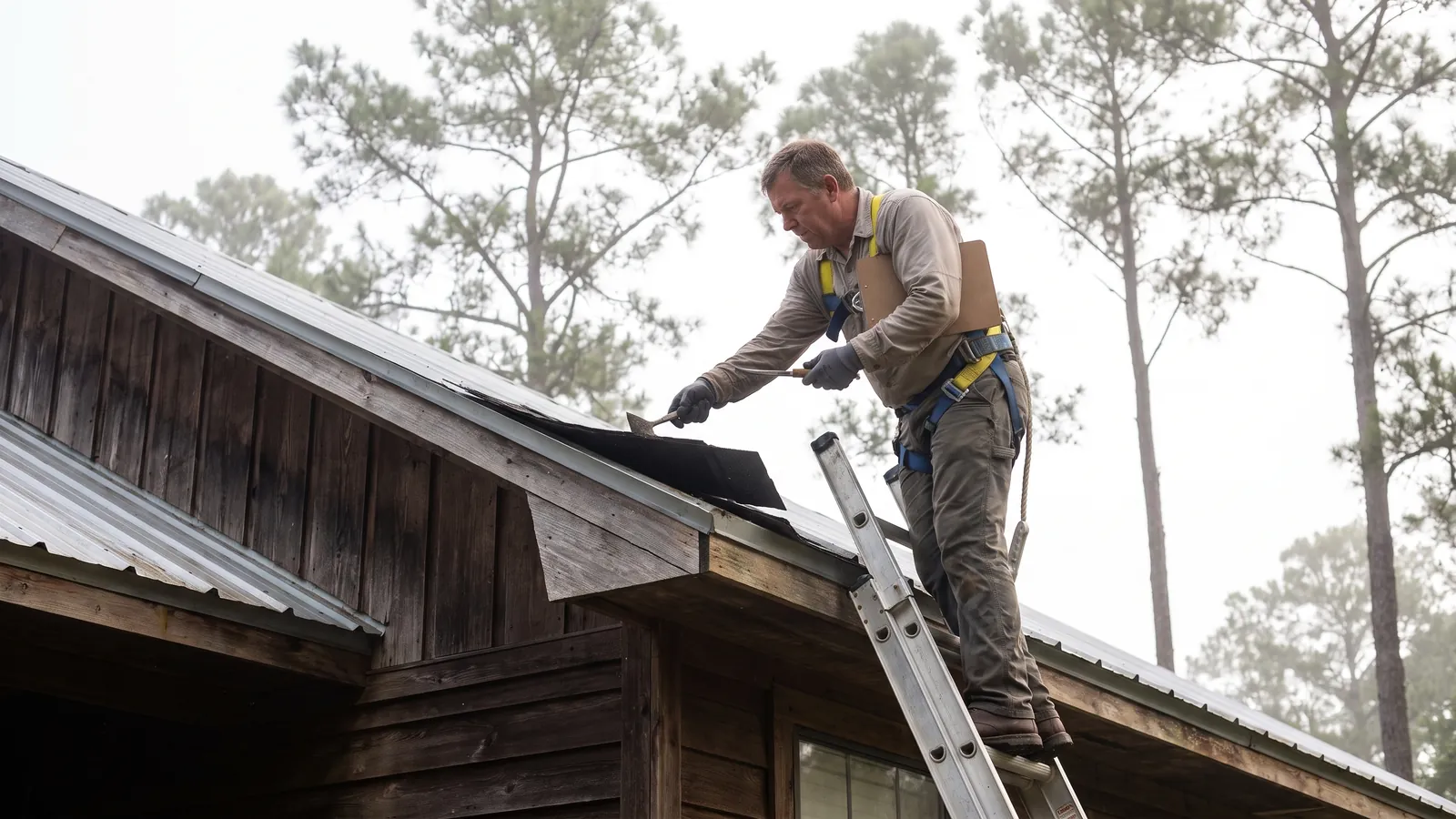
Why April
After a storm, every roofer on the coast is booked for weeks and the tarps go on first-come. Before the season, a roofer can inspect this week, fix the loose ridge cap and the split boot next week, and you ride out the first front of June with the roof sealed instead of waiting for a leak to tell you something was wrong. Mobile's record argues for doing it every year: Frederic in September 1979, Elena in September 1985, Georges in September 1998, Ivan on September 16, 2004, Katrina in August 2005, Nate in October 2017, Sally on September 16, 2020, Zeta six weeks later, and Isaias in October 2026. Storms come late here. Prep in the spring, inspect again after Labor Day.
The roof checklist
Sealant strips. The adhesive strip under each shingle is what keeps it down in wind, and after a few summers it lets go on the windward slopes. A pre-season inspection lifts a few shingles along the eaves and ridge; if they come up without resistance, they need hand-sealing or replacing before the first front does it for you. Ridge and hip caps. First to go in every storm; check for cracks and loose caps and reseal or replace. Starter and drip edge. Loose drip edge or a starter course that's not adhered is where the wind gets in; FORTIFIED exists largely because of this detail. Pipe boots and flashing. Split boots and caulked-over flashing leak in a tropical storm's sideways rain long before the wind matters. Vents and turbines. Turbines are the first thing to leave in a hurricane, taking a hole with them; swap them for a wind-rated ridge vent. Decking. Soft spots felt underfoot mean rot; fix them now. Metal roofs. Check exposed fasteners for backed-out screws and dead washers, and the trim and flashing for loose edges. Gutters. Clear them; a gutter full of pine straw and wet oak tassels is a lever the wind uses to tear the fascia off, and it overflows into the soffit. Guards help. See gutters.
The trees
Nearly half of the Hurricane Sally claims across more than 40,000 Mobile and Baldwin County homes involved a fallen tree, and no roof standard addresses that. A tall pine standing alone over the house, a water oak with a hollow fork, limbs over the roof: those are a tree company's work in the spring, and they matter as much as anything on this list. Have the trees near the house looked at before June 1.
Papers to have before the storm
Your policy's declarations page, with the hurricane deductible (often 2 to 5 percent of dwelling coverage on the coast) and any roof age schedule. Photos of the roof from the ground and the attic, dated, so there's a "before." Your roofer's number saved in your phone. The FORTIFIED certificate if you have one, and the endorsement on your policy if you have that. The Strengthen Alabama Homes schedule for your county, because if the storm takes the roof, the grant can rebuild it FORTIFIED. If you've been meaning to replace a tired roof, the spring is the time; a FORTIFIED replacement in April with the grant beats a claim in September.
The night it lands
Nobody goes on a roof in hurricane-force wind, including us. If water comes in, move what's under it, catch what you can, and photograph everything. When the gusts drop into the range where a ladder is safe, we roll on the priority list with water in the house first; Mobile County residents who can't reach a roofer can call 211. Then daylight: photos before the tarp is touched, a storm report with the wind data for your address, and the claim decision made with numbers in front of you. Read how a hurricane roof claim works.
After the season
Inspect again in December. Shingles that lifted and lay back down with the seal broken, creased ridges and backed-out nails from a near-miss storm won't leak until the winter fronts, and if they're not on record within weeks of the storm, they become a wear-and-tear argument. Storm inspections with us are free, with photos, any time of year.
Common questions
Is a pre-season inspection free?
Yes, with photos and a written list if anything needs fixing. Most of what we find is a few hundred dollars: boots, caps, a loose drip edge.
Should I replace my roof before the season or wait?
If it's tired, before. A spring replacement built FORTIFIED with the grant costs less than a September claim on a worn-out roof paid at actual cash value, and the discount starts the day the certificate arrives.
Can I check the sealant strips myself?
From a ladder on a one-story, carefully, in the morning before the shingles get hot: lift the edge of a few shingles along the eave. If they come up freely, call. Steep or two-story roofs, call us.
What about the turbines?
Replace them with a wind-rated ridge vent. They work when they spin, they leave in a hurricane, and FORTIFIED doesn't allow them.
What should I do about the pines?
Have a tree company grade the ones near the house in the spring. A lone tall pine over the roof is the most common Sally claim there was, and it's a tree question, not a roof one.
When does hurricane season actually get bad in Mobile?
The record says September and October. Ivan and Sally both came on September 16, Zeta on October 28, Isaias on October 9. Prep in April, check again after Labor Day.
Related: Roof inspection · Hurricane damage · Emergency tarping · Attic ventilation