After the hurricane: how a roof claim works in Mobile
Frederic, Elena, Ivan, Katrina, Sally, Zeta, Isaias. Every one of them has been followed by the same two weeks: tarps, adjusters, and strangers in trucks. This is the order to do things in, what your policy actually covers, and what nobody honest will ask you to sign.
The first 48 hours
Safety first: stay off a wet roof, and if a power line is down or on the house, Alabama Power and 911 come before anyone. Then photograph everything from the ground and inside, before anything is moved or covered: missing and lifted shingles, the ridge, debris, the tree if there is one, water stains, wet floors. Those pictures are the start of your claim. Then stop the water: a tarp from a roofer (ours are run past the ridge and battened; see emergency tarping), or, if no roofer can get there, Mobile County residents can call 211 for tarp help, as the City did after Sally. Keep the tarp invoice; policies cover reasonable emergency measures to prevent further damage. Move or cover what's under the leak, and keep receipts for anything you buy.
Before you file
Get a roofer's inspection and written estimate before you call your carrier, for two reasons. First, the hurricane deductible: on most Gulf Coast policies the named-storm deductible is a percentage of the dwelling coverage, commonly 2 to 5 percent, so on a $300,000 house a 2 percent deductible is $6,000. A $1,400 ridge-cap repair is a repair, not a claim, and filing it adds a claim to your record for nothing. Second, documentation: a slope-by-slope photo record with the storm date and the National Weather Service wind data for your area, separating storm damage from wear, is what makes the adjuster visit short. Lifted-and-resealed shingles, creased ridges and backed-out nails aren't visible from the driveway and don't leak until November; if they're not on record within weeks of the storm, they become a wear-and-tear argument later. See hurricane damage.
What's covered and what isn't
A standard homeowners policy covers sudden wind damage from the storm, the interior damage the water caused, reasonable emergency measures, and, if a tree came down on the house, its removal from the structure as part of the loss. It generally doesn't cover a roof that was already at the end of its life, long-term wear, algae and granule loss, manufacturing defects, or a leak that predates the storm. Flood and storm surge are a separate policy (NFIP or private flood). The adjuster's job is to separate those; a good roofer's report does it for them. Roof schedules are the other thing to look at: many coastal policies now pay actual cash value, not replacement cost, on roofs past a certain age, which means a 20-year-old roof is paid at a depreciated figure. Read your declarations page before the storm, not after.
The adjuster visit
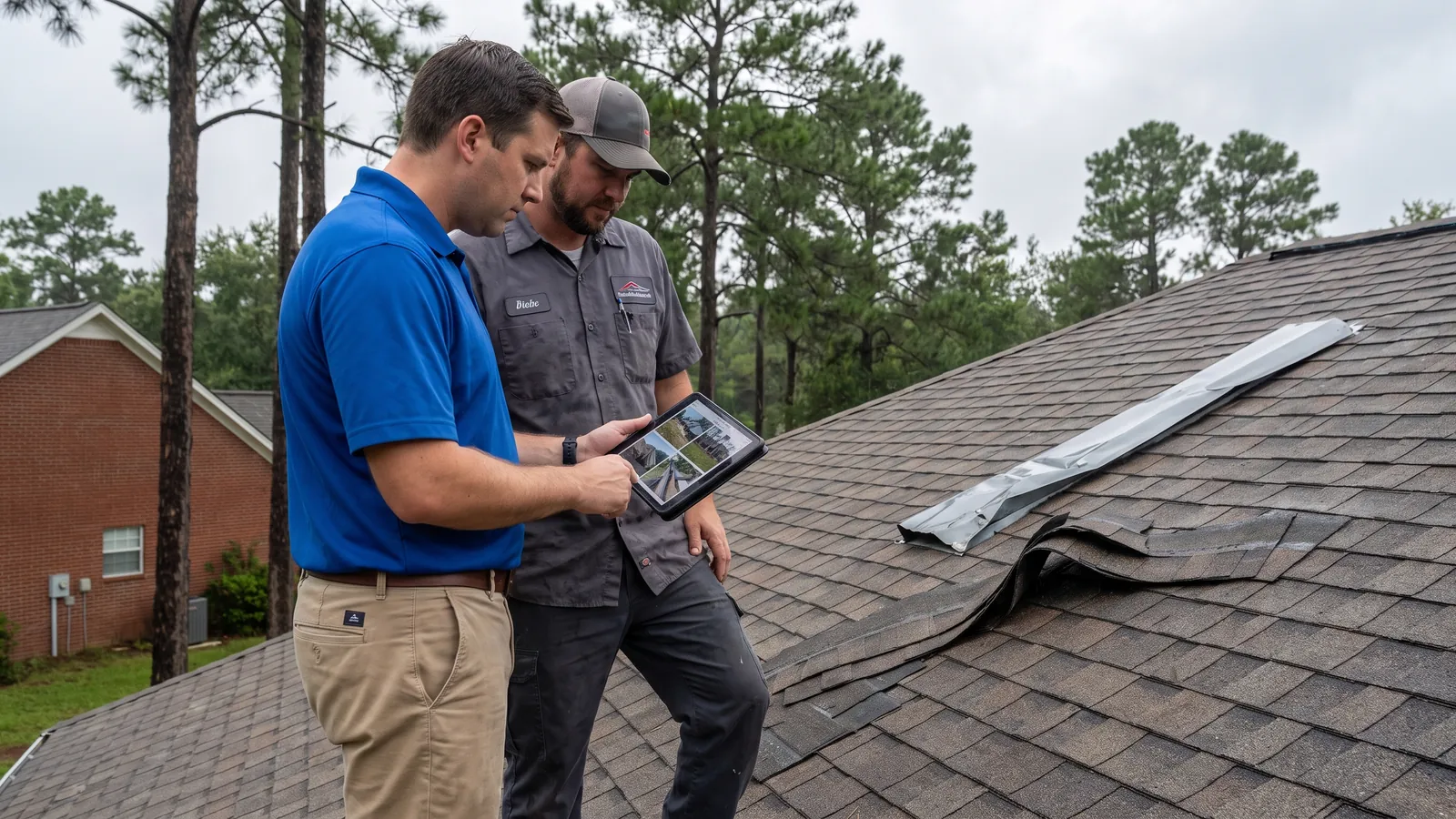
Your carrier assigns an adjuster, usually within days after a big storm, sometimes weeks. Have your roofer there. We meet the adjuster on the roof with the photo record, walk every slope, and make sure the report includes the hidden damage and the flashing and vents, not just the missing shingles visible from the yard. The adjuster writes a scope and an estimate; your carrier pays the approved amount minus the deductible, often in two payments (actual cash value now, the depreciation holdback when the work is done). If the scope misses something, you supplement with documentation; carriers revise scopes on evidence routinely. If it stays denied and you think it's wrong, the Alabama Department of Insurance takes consumer complaints, and public adjusters and attorneys exist for large disputes; a roofer can't negotiate your claim and shouldn't offer to.
Getting a better roof out of a bad storm
If the roof is being replaced, three things can make the new one FORTIFIED for little or nothing beyond the deductible. A 2020 Alabama law made a FORTIFIED endorsement available on every homeowners policy, and most carriers' endorsements pay extra toward the sealed deck, ring-shank nailing and Class H shingles when a roof is replaced after a covered loss; if you have it, tell the adjuster. The Strengthen Alabama Homes grant pays up to $10,000 for Mobile and Baldwin primary residences when a window is open. And once designated, the roof earns the discount Alabama law requires insurers to offer, 25 to 35 percent off the wind premium with most carriers. Read FORTIFIED roofs and the Alabama grant.
The scams, in the order they arrive
The Home Builders Licensure Board publishes the same consumer warning after every hurricane, and it's accurate. Day two: a truck with out-of-state plates and a magnetic sign knocks and offers a free inspection, then a "free roof." The pitch is that they'll waive or absorb your deductible; that's insurance fraud, for them and for you. They'll ask you to sign an assignment of benefits, which hands your claim payments to them, and a contract, in the driveway, before any adjuster has seen the roof. They'll want a deposit. By Christmas they're in another state and the roof they put on, if they put one on, has no warranty anyone will honor. The defenses are simple: ask for the HBLB license card and verify it at hblb.alabama.gov or 334-242-2230, ask for the insurance certificate, get everything in writing, sign nothing in the driveway, pay no deposit until materials are on site, and work with a company that has a local address and will be here for the next storm. See how to check an Alabama roofer.
The storm record, for your file
Adjusters work from weather data, and so do we. Sally, September 16, 2020: Category 2 at Gulf Shores at 105 mph, crawling at 3 mph; gusts of 81 at Mobile Regional, 97 at Dauphin Island, 62 at Fairhope, 121 at Fort Morgan; 5.17 inches of rain in Mobile, 12.58 in Daphne, 12.44 in Fairhope, 29.99 in Orange Beach; more than 100 trees down in the city and 160,000 homes dark. Zeta six weeks later. Ivan, September 16, 2004: 120 mph just west of Gulf Shores at 1:50 a.m. Isaias, October 9, 2026: Hurricane Warnings for Mobile and Baldwin, with central Mobile County forecast for gusts to 55, the coast 65, central Baldwin 65 and the Baldwin beaches 75. When your claim is for Isaias, the report cites those numbers for your address.
Common questions
Should I file a claim for every storm?
No. Compare the repair estimate to your hurricane deductible first. Repairs under the deductible are repairs; claims add to your record and can affect renewal.
How long do I have to file?
Policies set their own deadlines, often a year for the claim and less for notifying the carrier. Document within weeks regardless; the evidence is what gets stale, not the deadline.
The adjuster offered less than the roofer's estimate. What now?
Supplement with documentation. We photograph and write up what the scope missed, you submit it, and carriers revise on evidence. If it stays short, the Department of Insurance takes complaints.
Can a roofer negotiate with my insurance company?
No; that's a public adjuster's licensed job. A roofer can document, estimate, meet the adjuster and build to the approved scope, which is what we do.
Will my premium go up after a claim?
Often, and a FORTIFIED replacement is the best counter: the designation earns a discount Alabama law requires insurers to offer, and the data behind it is why they offer it.
What if my roof was old before the storm?
Then part of the claim may be paid at actual cash value, and the carrier may argue wear. A roofer's report separating storm damage from age is your best tool, and FORTIFIED with the grant is usually the way to afford the roof you need anyway.
Related: Insurance claims · Hurricane damage · Emergency tarping · FORTIFIED guide