Hurricane and wind damage: what the storm did, in writing
Hurricane wind gets under a roof at the edges and the ridge first. Some of the damage is obvious the next morning. A lot of it isn't until the rains in November. We document all of it, tied to the storm date, before anyone files a claim.
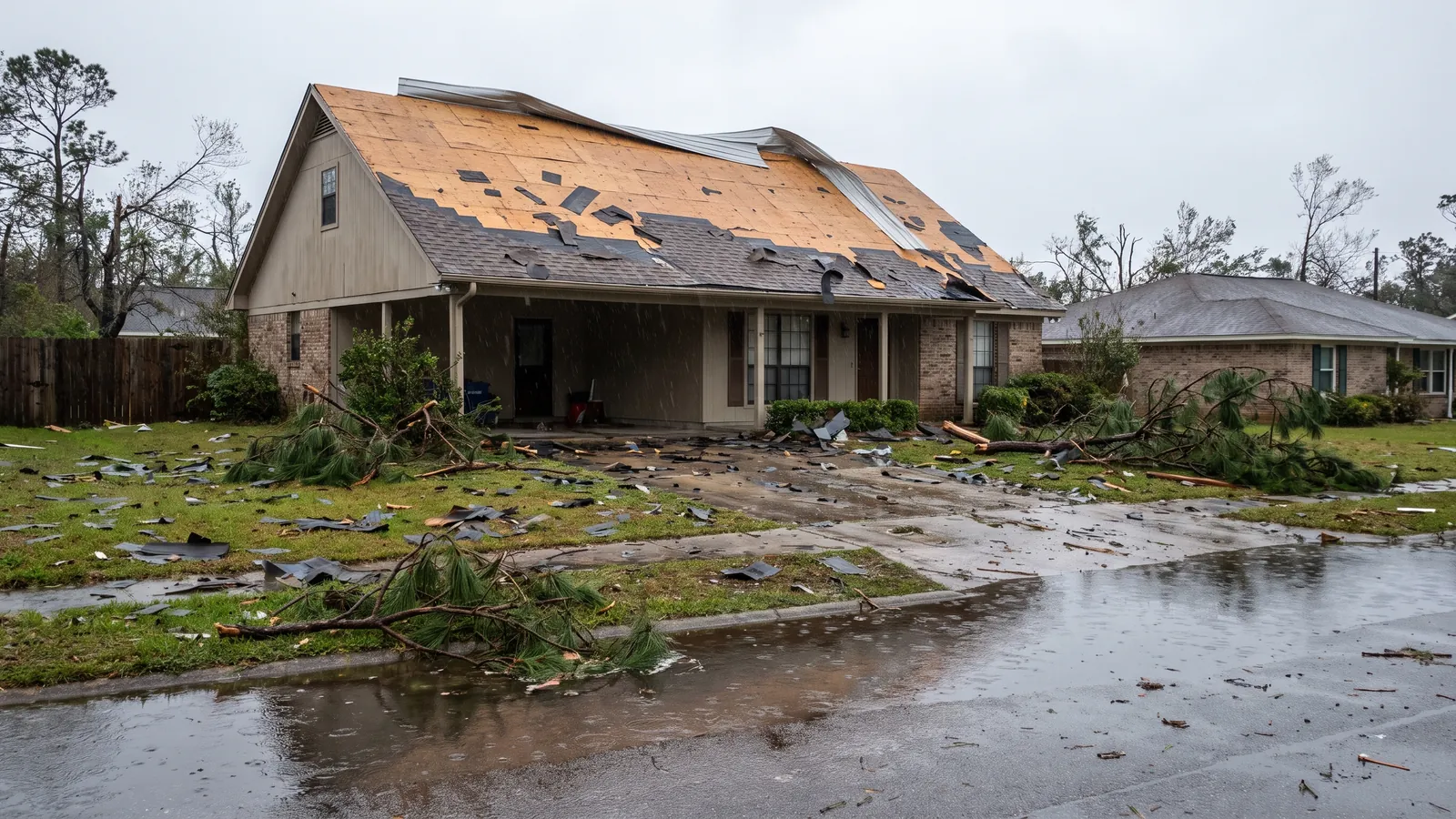
Mobile's hurricane record is the reason this page exists: Frederic over Dauphin Island in 1979, Elena's eyewall in 1985 that tore roofs off across Mobile and Baldwin counties, Georges, Ivan at 120 mph in 2004, Katrina, Nate, Sally with an 81-mph gust at Mobile Regional and 97 at Dauphin Island in 2020, Zeta six weeks later, and Isaias in October 2026 with Mobile and Baldwin under a Hurricane Warning and gusts of 55 to 75 forecast. Every one of them leaves the same roofs on the same streets with the same damage: ridge caps peeled, the first courses above the eave lifted and creased on the windward slopes, shingles torn where the sealant strip had already let go, vents and turbines ripped out, and tree limbs through the decking.
The obvious damage is easy. The damage that costs people money is the kind that doesn't leak until the next rainy season: shingles that lifted and lay back down with the seal broken, so the next front lifts them again; creases along the ridge that crack the mat; nails backed out by the uplift; flashing bent at a chimney. If that isn't documented in the weeks after the storm, the claim six months later turns into an argument about wear and tear. So a hurricane inspection with us is a full-roof photo record, slope by slope, with the storm date and the National Weather Service wind data for your area in a written report, delivered before you call your carrier. Then the repair or replacement is built to the scope the adjuster approves, and never to a scope padded to cover a deductible, which Alabama's licensing board warns about after every storm.
One more thing the data says. The University of Alabama's study of Hurricane Sally claims across more than 40,000 Mobile and Baldwin County homes found FORTIFIED homes had 55 to 74 percent fewer claims. If the storm has made a replacement necessary, the state will pay up to $10,000 toward making the next roof FORTIFIED, and most policies with a FORTIFIED endorsement pay extra toward the upgrade when a roof is replaced after a covered loss. The best time to build a hurricane-proof roof is when the insurer is already paying for a roof.
What's included
Slope-by-slope photo record
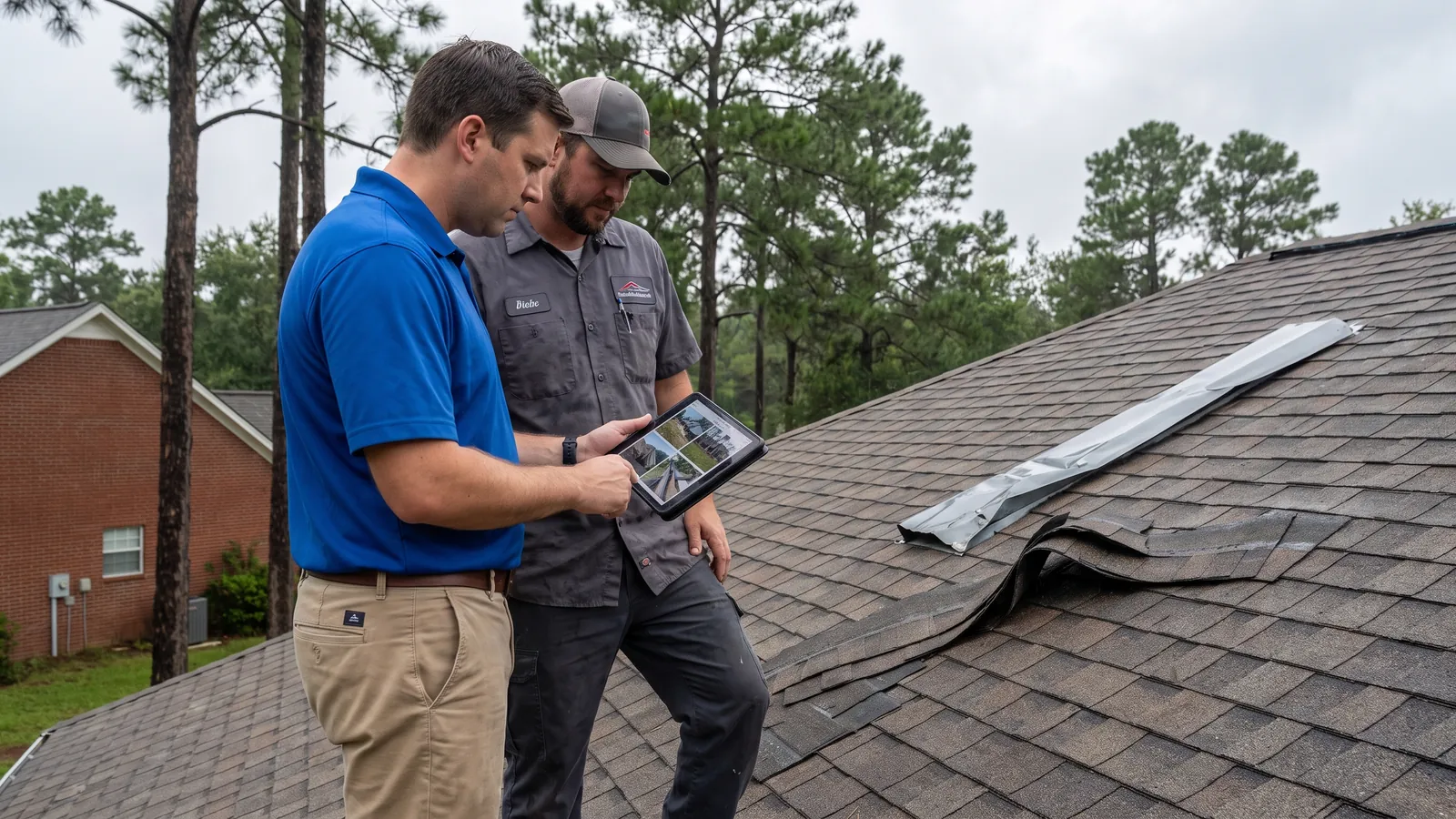
Every slope, the ridge, the edges, the vents and the flashing photographed and dated, with the NWS wind data for your area.
Hidden damage found
Lifted-and-resealed shingles, creased ridges, backed-out nails and bent flashing identified before they leak.
Adjuster-ready report
A written storm report and itemized estimate your carrier can work from, delivered before you file.
Walk-through with the adjuster
We meet them on the roof and show them what we found.
Repair or replace to the approved scope
Course-by-course repairs where that's right, a full replacement where it isn't, built to the scope, never padded.
FORTIFIED upgrade on a replacement
Sealed deck and ring-shank nails added, with the endorsement and the grant applied where you have them.
Hurricane and wind damage repair cost in Mobile, AL
| Job | Typical price | Notes |
|---|---|---|
| Hurricane inspection and written storm report | Free | Photos, wind data, itemized estimate |
| Ridge cap and edge course repair, one slope | $400 – $1,200 | Most common Sally-type damage |
| Wind-damaged slope rebuilt | $1,200 – $3,500 | Shingles and underlayment on one slope |
| Vent, turbine or boot replacement | $175 – $450 each | Ripped out by uplift |
| Decking repair after a tree strike | $85 – $140 per sheet | Plus the slope rebuild |
| Full replacement after a storm | See roof replacement | Built to the approved scope |
| FORTIFIED upgrade on a replacement | + $1,500 – $2,500 | Offset by the endorsement or the grant |
These are 2026 Mobile-area ranges so you can budget. Your written price is itemized (tear-off, decking, underlayment, sealed deck, flashing, vents, disposal, permit) and good for 30 days.
Recent work
Questions we get about hurricane damage
My roof looks fine from the ground. Should I still have it inspected after a hurricane?
Yes, and soon. Lifted-and-resealed shingles, creased ridges and backed-out nails aren't visible from the driveway, and if they aren't documented within a few weeks of the storm the leak in November becomes a wear-and-tear dispute. The inspection is free.
Will insurance cover hurricane damage?
Usually, for sudden wind damage, minus your hurricane deductible, which on the coast is often a percentage of your dwelling coverage. Long-term wear, algae, and a roof that was already at the end of its life are the usual exclusions. Our report separates the storm damage from the wear so the conversation with your adjuster is about facts.
Can you handle the claim for me?
We document, estimate, meet the adjuster and build to the approved scope. We can't be your public adjuster or negotiate your claim; that's regulated. What we can do is make sure the adjuster sees everything.
A roofer knocked on my door after the storm offering a free roof if I sign. Is that legit?
No. A contractor who offers to waive or absorb your deductible is committing insurance fraud, and Alabama's Home Builders Licensure Board issues the same warning after every hurricane: ask for the Board's license card, verify it, get everything in writing, and don't sign an assignment of benefits in your driveway.
How soon after the storm can you get here?
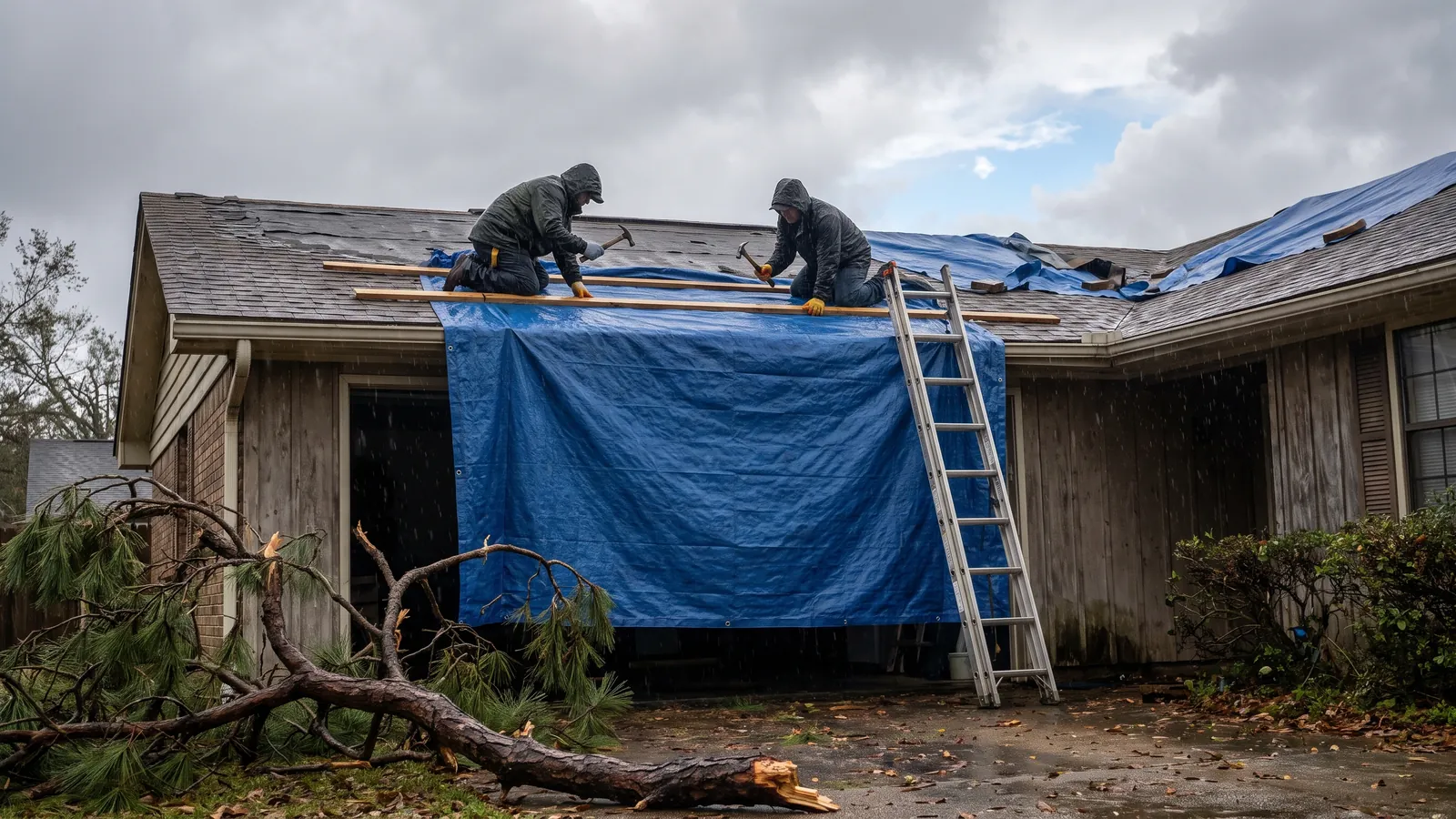
Emergency tarping as soon as the wind drops. Inspections and reports in the days after, in the order calls came in. Call early; after Sally the list ran for weeks.
Should I replace with FORTIFIED after a storm claim?
If the roof is being replaced anyway, almost always. The sealed deck and ring-shank nails add $1,500 to $2,500, your insurer must offer a discount once it's designated, a FORTIFIED endorsement on your policy pays toward the upgrade, and the state grant covers up to $10,000 in Mobile and Baldwin counties.